
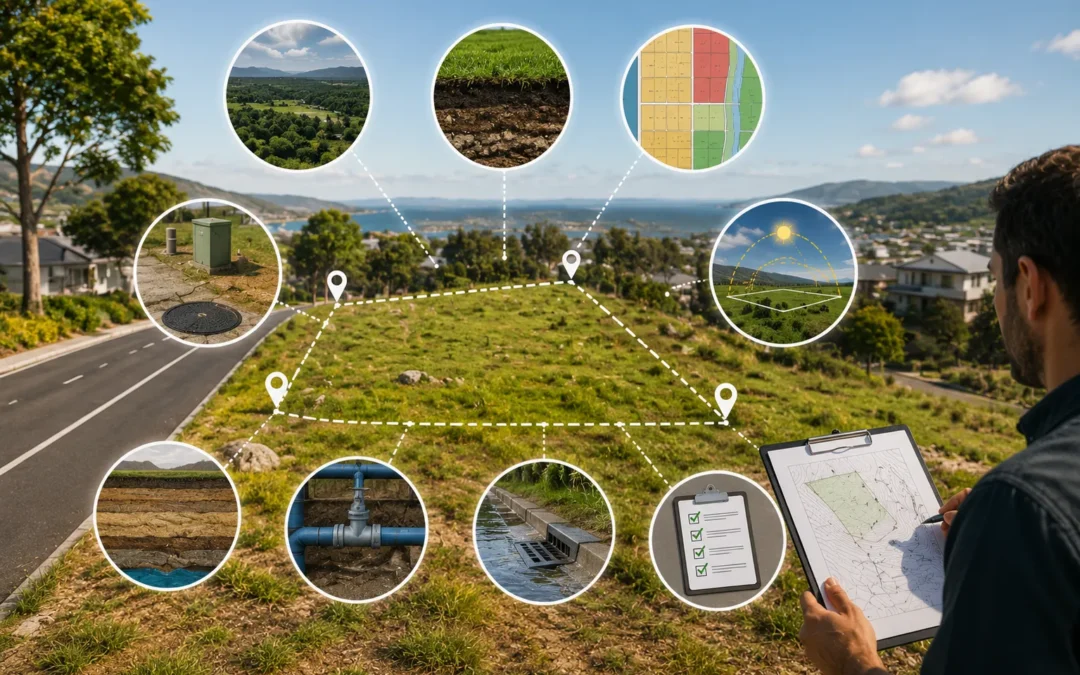
Purchasing a block of land is an exciting first step in bringing your custom dream home to life. Your ideal site will be determined by several critical factors, including design potential and limitations, construction costs, council and planning requirements, site access, lifestyle, functionality, resale value, and environmental risks.
For these reasons, we encourage meticulous planning to ensure you receive a high return on your investment. If you’re looking for a block of land for your new custom home build but don’t know where to start, we’ve got you covered. As a Brisbane custom homes builder serving numerous homeowners in Australia since 1996, we offer unique insights to help you get started in your journey.
Key Takeaways
- Set a realistic budget before buying land, factoring in land costs, utility connections, permits, and construction expenses. The land purchase can account for 25%–50% of the total home-building budget.
- Work with experienced professionals, including real estate agents, builders, and surveyors, to gain expert advice on zoning, site suitability, financing, and potential risks.
- Choose a location that suits your lifestyle, considering proximity to schools, workplaces, healthcare facilities, shopping centres, and future growth potential to maximise convenience and property value.
- Assess site conditions and regulations carefully, including zoning laws, soil quality, drainage, orientation, environmental risks, easements, and property boundaries before committing to a purchase.
- Review utility access, road connections, and financing options, then negotiate the purchase price strategically to secure a suitable block that supports your custom home goals and long-term investment plans.
This blog explains how to evaluate a block of land for your new custom home, helping you make informed decisions, manage smooth project timelines, and improve your quality of life.
Key Steps to Securing Land for Your Custom Home
1. Determine your budget: Choosing a block of land for your new custom home isn’t a haphazard process. You must set a clear budget, including the cost of the land, permit payments, utility connections, and construction expenses.
In Australia, the cost of the land for a custom home usually ranges from 25% to 50% of the total project cost. However, it’s important to note that this estimate varies significantly by location and the type of custom home. Homeowners residing in regional areas and outer suburban estates often pay less than those living in bustling metropolitan suburbs.
Always think long-term—knowing your preferred location and custom home build type allows you to set a realistic budget for your block of land.
2. Hire a real estate professional: Navigating the complexities of real estate can be challenging and time-consuming. Worse, doing everything yourself can lead to impulsive purchases and potential long-term regret.
A highly experienced real estate agent can provide you with valuable insight and guidance on zoning regulations, neighbourhoods, site safety issues, and financing. He can identify the best locations based on your preferences and budget. A real estate professional can negotiate your purchase, secure competitive pricing, and guide you through the land buying process.
3. Identify your site: Your preferred site is a critical factor in your custom home build. As experienced Brisbane duplex builders with 30 years of industry expertise, we strongly recommend choosing a location near your office, your children’s school, shopping centres, hospitals, and other amenities. Proximity and accessibility to these locations enhance long-term convenience.
Consider your lifestyle when choosing your location. Whether you prefer a rural, a suburban, or an urban setting, your site should align with your preferences, providing you with long-term satisfaction. Ask your real estate professional to determine your shortlisted sites’ future value and growth potential to help you make an informed decision.
4. Explore zoning regulations: Zoning regulations and land use restrictions determine your block of land’s privileges and limitations. Enquire about these laws with your local planning authority to ensure your proposed custom home complies with their requirements, identify any limitations that may interfere with your design preferences, and prevent costly delays, rework, or approval issues.
In Australia, zoning regulations may also specify building height restrictions, setback requirements, site coverage ratios, heritage overlays, bushfire management requirements, flood-prone land controls, and environmental protection measures. Understanding these regulations early in the planning process enables homeowners to choose a block of land, streamline approvals, and design and build a custom home that aligns with their lifestyle and local council regulations.
5. Inspect the site thoroughly: We strongly recommend inspecting your ideal site before building on it. You can ask experienced Gold Coast duplex builders to help you assess the soil topography and quality, drainage, and sloping blocks. The land’s orientation is critical, as it can help regulate your home’s energy efficiency and natural lighting.
Research the property’s history and ask your contractor to perform environmental tests to eliminate potential site hazards that can hinder or prevent you from building your dream custom home.
We also recommend obtaining a property survey before building your custom home. A registered land surveyor can provide information about property boundaries, site dimensions, easements, existing structures, and encroachment restrictions. Your designer and builder will use this information to position your future home correctly on the block of land and maximise its long-term potential.
6. Evaluate utility access: Evaluating a block of land for your custom home requires due diligence. Check access to key utility services, including water, telecommunications, sewerage, electricity, and stormwater drainage, is critical. Although many established residential areas already have these connections, some rural, regional, or newly developed estates may require utility access before construction work begins. Identifying these potential issues early in the planning process can help prevent cost overruns and project delays.
In some cases, extending utility connections or upgrading existing ones may require approval from your local council and service providers. Consult a reputable and experienced builder and surveyor before purchasing a block of land to streamline processes and prevent issues.
7. Review access to the property: A block of land outside a zoned neighbourhood, located in a rural area, or that’s large in size, may have road access issues.
If your block of land has road access limitations, ask your builder if connecting to existing roads and removing existing obstacles to your property are possible. Although these add-ons can increase your total project cost, they will significantly improve long-term convenience.
Enquire with your local council whether your block of land can be accessed via a private road, an easement, or a driveway. Private access arrangements may involve shared maintenance responsibilities, access agreements, and additional costs. Understanding these responsibilities can help you prevent costly expenses and ensure your block of land aligns with your custom home build.
8. Obtain financing: Securing financing for your block of land usually begins with assessing your borrowing capacity and paying a deposit worth approximately 10% to 20’%, depending on the lender. Obtaining pre-approval financing enables you to define your budget and begin your custom home build immediately.
Next, you must choose your preferred loan type, such as a land loan or a combined construction loan. Lenders will review your income, expenses, credit history, current debts, the land’s development potential, and other factors to assess your capacity to borrow funds and pay on time.
9. Negotiate: Never settle for the initial price that you see. Work with a reputable real estate professional who can help you negotiate and obtain the best possible price. Successful negotiation requires understanding the full cost of the land and justifying your position. A well-researched offer can increase long-term savings and enable you to stay within your custom home build budget.
10. Finalise the purchase: Once you’ve taken the preceding steps, you’re now ready to close the deal and secure your preferred block of land for your custom home build. Your real estate professional will help finalise the contract and the other required legal documents. At this point, you’re now ready to work with your builder and bring your dream home to life.
Conclusion
Choosing and evaluating a block of land is a critical step in your custom home build journey. From budgeting and zoning requirements to site conditions, utility access, and future growth potential, every factor can affect your home’s design, costs, functionality, and long-term property value. Taking proactive steps enables you to prevent unforeseen costs, streamline approvals, and create a strong foundation for a hassle-free home build.
At Unique Build, we provide expert guidance for your custom home build project. Since 1996, we have helped our clients evaluate potential sites, opportunities, and challenges, enabling them to maximise their property’s potential. Book an appointment today to start planning a home that aligns with your lifestyle, vision, and long-term goals.

