
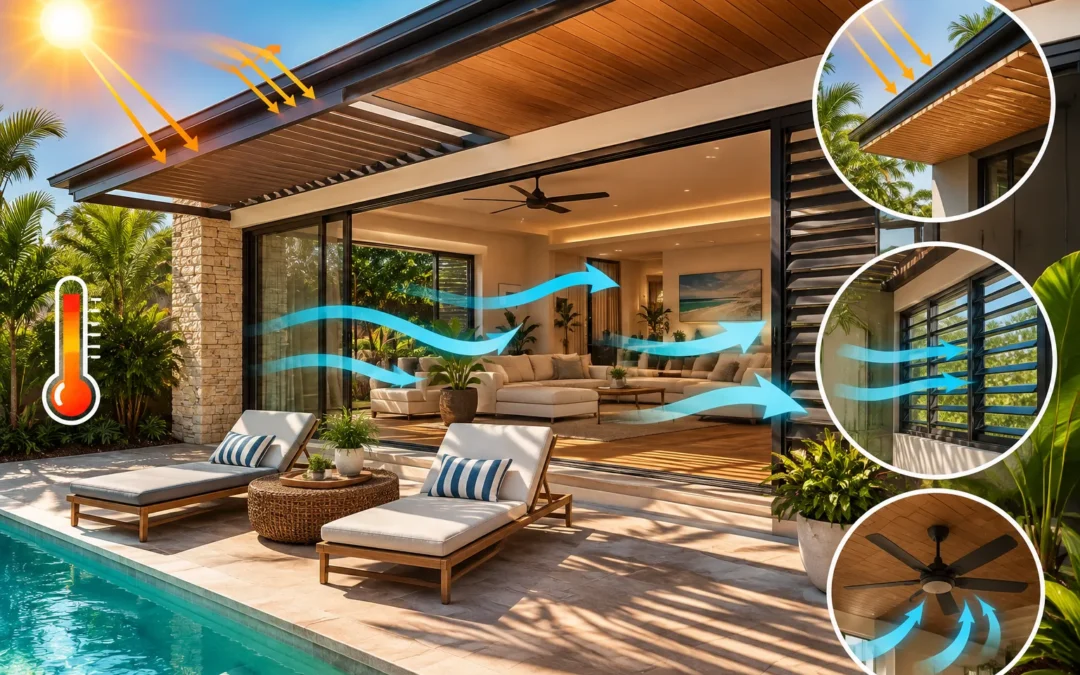
Queensland’s subtropical climate offers several unique advantages for building high-end homes, including vibrant indoor-outdoor spaces, abundant natural light, natural ventilation, enhanced connection with nature, and durable material selection. The state’s warm, year-round weather allows you to combine luxury with nature and seamless indoor-outdoor living.
As a Brisbane custom homes builder with an extensive 30-year track record, we design and construct homes that align not only with our clients’ lifestyles, but also with Queensland’s climate, enabling them to live comfortably throughout the year. Whether starting a conventional or knockdown rebuild, considering climate-specific factors, such as orientation, shade, and airflow, enhances convenience, improves energy efficiency, and increases long-term savings.
Key Takeaways
- Orientation is fundamental to Queensland home design, with living areas positioned to capture favourable sunlight while reducing exposure to harsh afternoon heat.
- Strategic shading helps control heat gain, using wide eaves, pergolas, louvres, and landscaping to protect windows, walls, and indoor spaces from intense sunlight.
- Natural airflow improves comfort and efficiency, with cross-ventilation, ceiling fans, high ceilings, and strategically placed openings reducing reliance on air conditioning.
- Climate-responsive features work best together, as orientation, shading, and ventilation should be integrated from the beginning rather than treated as separate design elements.
- Thoughtful climate design delivers long-term value, creating comfortable, functional, energy-efficient homes while reducing energy consumption and improving year-round liveability.
This blog explains how builders design homes for Queensland’s heat, helping you gain valuable insights, make informed decisions, and enjoy long-term peace of mind.
Why Queensland’s Climate Influences High-End Home Design
Brisbane’s and the Gold Coast’s warm, subtropical climate makes it challenging for contractors to design and build homes that thrive in such an environment. Harsh afternoon sunlight and frequent tropical storms make it impossible for houses designed for cooler climates to survive in Queensland.
House design and building standards have shifted considerably over time. Standard new homes with a seven-star energy rating save an average of $185 on annual electricity bills, representing a significant increase over their six-star counterparts, per Newnham Constructions.
A thoughtfully designed luxury property can achieve greater benefits by integrating innovative features for solar orientation, shading, and natural ventilation from the outset. Thinking long-term enables homeowners in Queensland to enjoy cosy settings while reducing long-term energy consumption.
Orientation: The Foundation of a Climate-Responsive Design
Orientation is one of the most important considerations when building a high-end home in Queensland. As award winning Brisbane duplex builders, we always consider the home’s position within the block before selecting materials, window styles, and interior finishes. For instance, we position the living areas towards the north to optimise gentle winter sunlight. On the other hand, we often position larger glazing spaces on western facades to prevent considerable heat gain from the harsh Queensland afternoon sun.
We recommend positioning bedrooms, bathrooms, and less frequently occupied rooms toward the west, where they can thrive with less daylight and comfortable temperatures. A reputable builder can recommend strategic, long-term placement of your living spaces to minimise the effects of the oppressive heat.
Fortunately, this strategy doesn’t increase construction costs. With careful, meticulous planning, including evaluating the block’s aspect and the sun’s movement, Queensland residents can enjoy comfortable indoor temperatures, maximise energy efficiency, and gain long-term peace of mind.
Shade: Taking Proactive Measures Against the Queensland Heat
Shading is the next critical step in building a Queensland-friendly high-end home. Strategic shading determines how much sunlight reaches your home daily. Nowadays, many homes in the state include wide eaves (the extended sections of the roof that project beyond the exterior walls), providing shade and protecting the walls, windows, and doors from the elements.
Wide eaves are just one option for your luxury custom home. Your builder can seamlessly integrate pergolas, louvres, and large trees to block harsh sunlight in the northern and western sections where sunlight can be brutal. These sun-blocking features add depth and texture to your bespoke luxury home while cooling its interior.
Designing Queensland Homes Around Natural Airflow
Even with effective shading, a tightly enclosed home can become uncomfortable in Queensland’s humid weather. As award winning Gold Coast duplex builders with an extensive 30-year track record, we recommend cross-ventilation to increase natural airflow inside your home, enhancing long-term comfort.
This strategy involves placing windows, doors, and other openings to allow more fresh air inside your home, reducing overreliance on air conditioning and long-term energy consumption. We also encourage you to consider ceiling fans, which encourage natural airflow in warmer neighbourhoods outside Brisbane.
Taking proactive steps and looking at the bigger picture enables you to beat the oppressive Queensland heat and enjoy cosy indoor settings. Your builder can integrate high ceilings, double-height voids, and strategically positioned openings to create a stack effect, allowing warmer air to rise and escape and cooler air to settle in the lower levels.
Whether starting a conventional build or knockdown rebuild in Queensland, considering these proven strategies encourages natural airflow and delivers a high return on investment.
Bringing it All Together in a Custom Home
These climate-responsive features work best when they are part of one integrated, cohesive design. Good orientation can still lead to excessive heat if your builder neglects strategic shading. Conversely, effective shading without sufficient airflow can block sunlight without maximising indoor comfort.
We strongly recommend investing in a proven custom home builder who prioritises orientation, shading, and ventilation from the outset rather than treating them as separate features over time. This is an effective strategy for knockdown rebuilds in Brisbane, where builders can address common shortcomings of older properties, such as poor solar orientation, insufficient shading, and limited natural airflow. Replacing a dilapidated home with a purpose-designed property that thrives in Queensland’s subtropical climate allows you to live comfortably, regardless of the season.
If you’re considering a knockdown rebuild on the Gold Coast, coastal humidity and salt exposure can place additional demands on building materials, finishes, and ventilation. Building climate-responsive homes with proper orientation, shading, and airflow leads to long-term comfort, functionality, and value for money.
Frequently Asked Questions (FAQs)
Is good orientation a primary consideration for luxury home builds in Queensland?
Proper orientation is a primary consideration for home builds in Queensland because it helps retain ideal indoor temperatures, enhance comfort, reduce reliance on conventional HVAC systems, and increase long-term savings.
Are wide eaves sufficient for homes in Queensland?
Although wide eaves block considerable sunlight from homes in Queensland, they can’t block harsh afternoon sunlight by themselves. For this reason, installing louvres, pergolas, and large trees can help maximise shading and enhance year-round comfort.
Can builders improve older homes in Queensland with better airflow?
Only to a certain extent. Existing homes can benefit from improved ventilation, additional windows, or ceiling fans. However, the property’s existing layout and structure can reduce long-term efficiency.
Knockdown rebuilds in Queensland provide greater flexibility, allowing builders to seamlessly integrate orientation, window placement, and ventilation from the outset.
Does my home in Queensland still need air conditioning if it’s already climate-responsive?
Many climate-responsive homes in Queensland still use air conditioning, especially in the hot summer months from December to February. However, an efficient passive design reduces long-term reliance and helps increase long-term savings.
Are climate-responsive luxury homes expensive?
As a trusted home builder in Queensland, we consider orientation, shading, and ventilation as thoughtful decisions instead of additional costs since they significantly reduce long-term energy consumption and utility costs.
Conclusion
Designing modern, climate-responsive luxury homes for Queensland’s subtropical climate requires efficient orientation, shading, and natural airflow. These strategies create a home that’s comfortable, functional, energy-efficient, and nature-oriented, reducing reliance on conventional HVAC systems and delivering a high rate of satisfaction and value for money.
Take that first step in building your luxury home in Queensland with Unique Built. Since 1996, we have created custom homes built around our clients’ lifestyle and the state’s unique climate. Book an appointment today to discuss your vision and bring your dream home to life.

