
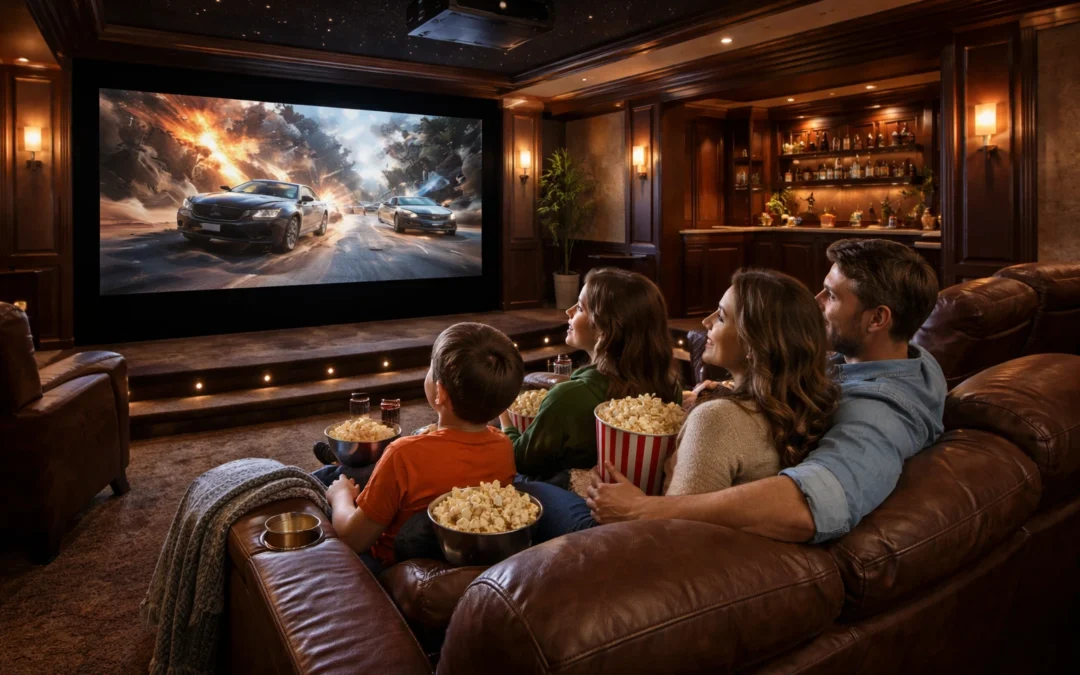
Gone are the days when people enjoyed a cinema-like experience exclusively at the movie theatre. Since Netflix, Prime Video, and Disney+ have been dominating the streaming movie niche, Australians can enjoy watching movies in the comfort of their own homes. For this reason, a home theatre can be a valuable addition to your custom-designed home.
Not only does a home theatre align with many homeowners’ preferences, but it also significantly enhances long-term property value, transforming your home into a wise investment. If you’re considering a home theatre room for your custom home, we’ve got you covered.
As a trusted Brisbane custom homes builder with a proven track record of helping Australian clients since 1996, we offer guidance and insights that enhance your standards of living.
Key Takeaways
- A custom home theatre enhances lifestyle by creating a dedicated space for immersive entertainment and relaxation at home.
- Tailored design ensures the room aligns with your home’s layout, aesthetic, and personal viewing preferences.
- Acoustic planning and soundproofing are essential for delivering high-quality audio and minimising noise disruption.
- Custom cabinetry and storage solutions enhance functionality while maintaining a clean, organised space.
- Home theatre rooms can be designed as multi-purpose spaces for movies, gaming, and social gatherings.
This blog will outline how to add a home theatre room to your custom-designed home, empowering you to take charge of your indoor living space and improve your quality of life.
Home Theatre Room Defined
A home theatre room is a setup that provides a premium audiovisual experience in a custom-designed home. It usually has the following features:
- A large screen: This is the home theatre’s visual centrepiece.
- Multi-speaker audio system: This setup consists of front, left, and right speakers, centre channel, surround speakers, and optional height speakers.
- AV receiver (AVR): The receiver processes audio and video signals and operates its speakers.
- Subwoofer: This equipment is designed to handle deep bass and low-frequency effects.
- Source components: Homeowners often connect their home theatre systems to streaming devices, such as smart TV apps or media boxes.
- Other components: A home theatre room also includes a remote control, HDMI cables, speaker wires, Wi-Fi connection, seating, acoustic treatments, and lighting systems.
Home Theatre Room Advantages
Knowing the advantages of a home theatre room enables you to design and build a custom home that aligns with your preferences and long-term objectives. These include:
- Cinema-like experience: Modern home theatre rooms eliminate the need to watch movies at your local cinema. These innovations allow you and your family to enjoy a cinema-like experience in the comfort of your own home.
Modern 4K and 8K televisions and projectors can occupy a wall and resemble a smaller version of an authentic movie screen. Technicians consider a room’s layout, furniture placement, and reverberation when planning the home theatre room’s acoustics, ensuring a unique, Dolby-sound atmosphere.
- Expanded content: Whether you prefer comedy, action, drama, suspense, or documentaries, you can watch movies to your heart’s content. Nowadays, you can choose from thousands of streaming movies on Netflix, Prime Video, and Disney+. Unlike conventional movie theatres, where you can watch only one movie at a time, you can binge-watch your favourite flicks at home.
- Enhanced property value: A residential property with a home theatre room attracts more potential buyers than one that doesn’t. Buyers love custom homes with attractive features, such as open-plan living areas, modern amenities, smart storage solutions, and sustainable home solutions. Home theatres appeal to many people, potentially transforming your residential property into a wise, long-term investment.
Selecting the Perfect Room for Your Home Theatre
Choosing the perfect room for your home theatre is critical to create a mesmerising, cinema-like experience. As a provider of cost-effective Gold Coast knockdown rebuilds since 1996, we recommend planning the layout with your technician, considering equipment size, seating capacity, and other factors. This strategy ensures you can integrate your home theatre seamlessly into your preferred location.
Consider a large, rectangular room with minimal windows to create a unified, cinema-like sound and easier light manipulation. These factors allow you to choose an ideal room for your home theatre:
- Room area and shape.
- Natural light management.
- Acoustic qualities.
- Wiring and equipment setup feasibility.
- Roximity to other rooms.
Creating the Ideal Optimal Viewing Layout
Creating the best viewing layout for your home theatre system requires an evaluation of the screen placement and seating arrangement. We recommend installing a wireless surround system that combines performance, convenience, and flexibility.
The absence of long cables across a room creates a clean, clutter-free environment. These wireless systems are also easier to install than traditional wired versions. You can also position the speakers strategically to achieve a more unified sound. Set up a high-quality home projector approximately 3 metres to 6 metres from the screen to achieve high-quality images.
Sound System Options: Soundbars or Floor-Standing Speakers
Premium sound systems are game-changers for your home theatre room. The best setups provide superior audio qualities and bring movies to life.
You can choose between two sound system options:
- Soundbars: As a custom home builder with three decades of industry experience, we recommend soundbars for minimalists with small spaces. These sound systems are easy to install, offering homeowners a convenient option.
- Floor-standing speakers: These speakers produce realistic sounds and add visual appeal to your home theatre room. Alternatively, technicians can install in-wall or in-ceiling speakers to create a discrete setup.
Soundproofing Tips for Optimal Sound Performance
An effective soundproofing strategy significantly improves the acoustics of your home theatre system and creates an immersive experience for homeowners. Installing acoustic insulation materials on walls and ceilings, setting up acoustic panels, and sealing door and window gaps minimises external noise and significantly enhances sound quality.
Other soundproofing tips for your home theatre room include:
- Increase wall mass: Installing additional drywall layers and using sound-dampening drywall compounds increases wall mass and blocks sound efficiently.
- Consider soft furnishings: Thick carpets or rugs, heavy curtains, and upholstered fixtures reduce echo and improve sound quality.
- Isolate the subwoofer: Place the subwoofer away from walls to create a clean, low-end sound, reduce sound vibrations, and enhance sound imaging.
Lighting Solutions for An Authentic Movie Theatre Ambience
Strategic home theatre lighting solutions drastically improve your viewing experience and create an authentic movie theatre atmosphere. These tips enable you to achieve these objectives:
- Task lighting: Consider task lighting, such as a recessed ceiling can, for your home theatre system. Installing three to four rows of cans with dark trim rings spaced 1.5 metres apart allows you to see the theatre clearly when cleaning.
- Safety lighting: We recommend decorative step lights that are similar to those in cinemas to enhance safety in your home theatre room. These lights allow people to see the steps while they’re walking, preventing accidents and delivering peace of mind.
- Accent lighting: Proper accent lighting creates an amazing cinematic atmosphere, reduces eye strain, and improves visual contrast. Consider placing accent lights on the walls or columns along the length of your home theatre room. Avoid candelabra-type lighting with visible lamps that can distract viewers. Instead, conceal the light bulbs completely to prevent this scenario.
Indirect column, cove, or starfield LED accent lighting creates the movie theatre vibe in the comfort of your own home. A trusted provider of Brisbane knockdown rebuilds or a technician can help you achieve your desired accent lighting setup.
Choosing Between Projectors or Large-Screen TVs
Your choice between a projector or a large-screen TV for your home theatre room depends on several critical factors, including:
- Room size: A projector is ideal for medium-to-large rooms and very large screens. On the other hand, a large TV works better in small, tight spaces.
- Lighting conditions: We recommend using a projector in dark or light-controlled rooms. Conversely, large-screen TVs are suitable for bright home theatre rooms.
- Image quality: A projector produces large, immersive images and creates a better cinematic experience than a TV. The latter’s brightness and sharp image details appeal to some homeowners.
- Sound quality: Both options integrate well with surround sound systems, soundbars, and AV receivers. However, projectors require external audio since their built-in speakers are often minimal.
- Budget: Large TVs have become more affordable in recent years. On the other hand, the total setup cost of projectors may require higher prices.
- Installation and maintenance: Homeowners can easily install a large TV, which requires little maintenance. Conversely, many projectors may require ceiling mounting and lamp or filter maintenance.
Exploring Seating Options for Your Home Theatre Room
We recommend installing home theatre seats that ensure optimal comfort and align with your tastes and preferences. Whether considering individual recliners, loveseats, or tiered seating, choose seats that are cosy and appeal to your tastes.
On the other hand, the best materials for home theatre seats include leather or performance fabrics, which endure over time and require only easy maintenance. Consider built-in cup holders or USB charging ports to make your home theatre experience more convenient.
The ideal seating arrangement places each seat in a 30 to 40-degree viewing cone from the screen to ensure a cosy and mesmerising experience. Tiered seating prevents obstructed viewing while proper screen distance prevents neck strain. Regardless of your preferred setup, consider factors such as floor area, screen dimensions, and the number of seats to bring your dream home theatre room to life.
FAQs
What should you consider when designing a home theatre room?
Designing a home theatre starts with understanding how you want to use the space. Room size, layout, and seating arrangements all influence the viewing experience. It is important to plan for screen placement, speaker positioning, and lighting control to achieve the best results. Acoustic treatment and sound insulation also help improve audio quality. By considering these factors early, you can create a space that delivers a more immersive and comfortable experience, rather than trying to adjust the setup after construction is complete.
How important is soundproofing in a home theatre room?
Soundproofing plays a major role in creating an effective home theatre. It helps contain sound within the room while reducing noise from outside, allowing for a more immersive experience. Without proper sound control, audio quality can be affected, and noise may disturb other areas of the home. Using appropriate materials and construction techniques improves sound clarity and minimises distractions. A well-designed space ensures that both audio performance and overall comfort are maintained during use.
What type of seating works best in a home theatre?
Seating should be chosen based on comfort, layout, and viewing angles. Reclining chairs or tiered seating arrangements are often used to ensure each viewer has a clear line of sight to the screen. Spacing between seats is also important to allow easy movement without disrupting others. The number of seats should match the room size to avoid overcrowding. By planning seating carefully, you can create a setup that supports both comfort and functionality, making the room enjoyable for longer viewing sessions.
How does lighting affect the home theatre experience?
Lighting has a direct impact on both picture quality and overall atmosphere. A home theatre should allow for controlled lighting, with options to dim or block out external light sources. This helps improve screen visibility and reduces glare. Accent lighting can be used to create a comfortable environment without distracting from the screen. Planning lighting as part of the initial design ensures it works in harmony with the rest of the room, rather than becoming an afterthought.
Why is it important to integrate technology during the design stage?
Integrating technology early ensures that all systems work together efficiently. This includes wiring, speaker placement, and connections for audio-visual equipment. Planning these elements during construction avoids the need for visible cables or later modifications. It also allows for a cleaner and more organised setup. By considering technology from the beginning, you can create a home theatre that functions smoothly and delivers a consistent experience without technical limitations.
Conclusion
Creating a home theatre room in your custom-designed home can have a major impact on your standards of living and quality of life. This amenity offers a real-life cinematic experience in the comfort of your own home. Not only that, but the vast selection of streaming movies allows you to binge-watch at your convenience. A home theatre room also significantly improves your long-term property value, appealing to potential buyers and transforming your custom home into a wise investment.
Creating a home cinema setup requires careful room, sound system, viewing layout, lighting, screen, and seating considerations. Collaborating with a trusted builder or a home theatre technician allows you to create an immersive, life-changing viewing experience.
Allow Unique Built to bring your dream custom home to life. Since 1996, we have designed and constructed homes in Australia that align with our clients’ lifestyles. You can be next.
Book an appointment today to receive a personalised quotation, arrange an on-site inspection, and experience premium home-building solutions that fit your budget.

