
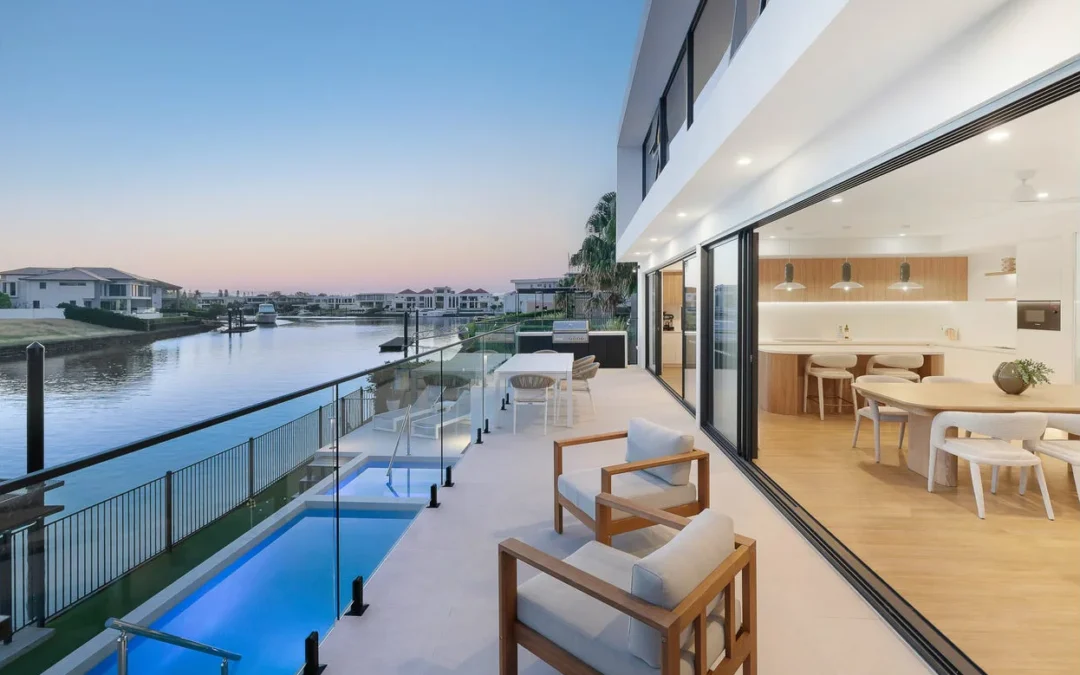
Living in a multigenerational home enables families to deepen bonds, care for relatives of all ages, cut expenses, share responsibilities, and achieve lasting financial security.
Designing and building a multigenerational home requires several crucial elements that help family members live harmoniously and enjoy an elevated quality of life. As a Brisbane custom homes builder established in1996, we deliver valuable insights to achieve these objectives and optimise your return on investment.
Key Takeaways
- Multigenerational homes support shared living while maintaining independence, allowing multiple generations to strengthen family bonds, share expenses, provide care, and improve long-term financial security.
- Several design options are available, including single homes with multiple private bathrooms, a primary residence with a granny flat, or two separate dwellings on the same block, depending on family needs and local regulations.
- Privacy should be a key priority, achieved through separate bedrooms, strategically positioned bathrooms, private entrances, and dedicated living zones that allow family members to enjoy personal space.
- Comfort and functionality can be enhanced with soundproofing and shared spaces, such as acoustic insulation, large kitchens, entertainment areas, and outdoor living zones that encourage family interaction.
Future-proofing the home is essential, with accessible design features for older adults and smart storage solutions that improve safety, organisation, convenience, and long-term property value.
This blog explores several key considerations when designing a multigenerational home, helping you achieve a seamless project timeline and experience long-term peace of mind.
Multigenerational Home Defined
A multigenerational home is a residential structure that can accommodate two or more family generations, which may include grandparents, parents, children, adult siblings, uncles, aunts, and caregivers.
Unlike conventional family homes, multigenerational residences usually feature key elements that emphasise shared living and privacy, including:
- Multiple living areas.
- Dual master suites.
- Separate entrances.
- Additional bathrooms and kitchens.
- Flexible floor plans that adapt to socialisation and privacy needs.
Multigenerational living has become more popular in Australia due to increasing housing costs, the desire to support older family members, childcare needs, and the benefits of sharing household finances and duties.
These homes allow family members to live together comfortably while maintaining independence, privacy, and functionality. Multigenerational homes enable them to strengthen family relationships, manage their day-to-day and long-term finances, and adapt to their evolving needs over time.
Multigenerational Home Design Options
Understanding the different types of multigenerational homes allows you to determine the best option for your family. These include:
- Single residence with multiple private bathrooms: Proximity is a primary consideration for families who prefer this type of living arrangement. This setup encourages greater interaction among family members in shared living areas, including the kitchen, living room, and patio. Families in Australia that care for younger and older relatives consider single residences with multiple en-suites an attractive option.
As respected Brisbane duplex builders with 30 years of industry experience, we also recommend this type of multigenerational home for clients with building restrictions that prohibit granny flats or secondary residences. This strategy provides them with a cost-effective alternative that accommodates several family members.
- Primary residence with granny flat: This type of multigenerational home allows families in Australia to live closely with and care for older relatives.
Building a granny flat beside a primary residential structure provides flexibility to evolving family needs. You can use the granny flat as an additional WFH space, guest suite, or Airbnb accommodation, improving your multigenerational home’s functionality and providing you with greater long-term financial stability.
- Two residential units: Alternatively, you can build two residences on the same lot, allowing you to enjoy the benefits of a single-family home and multigenerational living. Depending on family members’ preferences, this option also allows them to interact with one another while maintaining privacy.
It’s important to note that two residential units are generally more expensive upfront than other multigenerational homes. However, the cost often depends on several key factors, including the home’s aesthetics, size, and functionality. For these reasons, consulting renowned Gold Coast duplex builders allows you to weigh your options before making an informed decision.
If your preferred location’s zoning laws prohibit two residences on the same lot or the local council requires lot subdivisions, these contractors can provide you with suitable alternatives that deliver a high return on investment.
Key Considerations for Designing A Multigenerational Home
Multigenerational homes require privacy for each family group. For instance, a primary residence with a granny flat offers family members ample privacy. Regardless of your unique preferences, understanding these key design elements can help you create a well-balanced layout that supports both shared living and individual independence, ensures long-term comfort, and improves your home’s long-term functionality.
- Build separate bedrooms: Separate bedrooms for each family generation provides them with privacy, comfort, and convenience. You can achieve these goals by building several bedrooms on each level. Alternatively, we build bathrooms on opposite ends of each level in many multigenerational homes in Australia.
Separating bathrooms into distinct sections instead of building them adjacently in your multigenerational home significantly enhances privacy. Your builder can recommend the appropriate setup that allows you to maximise privacy for every family member.
- Create private entryways: Creating private entryways in strategic locations of your multigenerational home not only fosters privacy and independence, but it also allows family members to come and go at their own convenience. As a reputable multigenerational home builder since 1996, we create separate entrances and a distinct outdoor living area to maximise each family member’s long-term comfort and convenience.
- Install soundproofing systems: Soundproofing systems enhance privacy, significantly reduce noise transfer, and maximise long-term comfort. Your builder can install acoustic insulation within internal walls, ceilings, and between floors to maintain your multigenerational home’s quiet indoor setting.
Alternatively, solid-core doors, double-glazed windows, and sealed gaps also minimise noise transmission, allowing family members to enjoy a good night’s rest.
- Maximise shared living spaces: While privacy is essential in every multigenerational home, shared living spaces allow family members to interact comfortably whenever they’re not enjoying quiet solitude.
Consider large kitchen islands that maximise prep space and accommodate more people. Some multigenerational families prefer having a distinct kitchen or kitchenette that allows them to prepare and cook food more efficiently.
Ensure that your living room, entertainment room, basement, and patio have enough space to accommodate your family members. Whether it’s an innovative smart sound system, a piano, a home theatre, an alfresco dining area, or a large outdoor fire pit, ensure that you incorporate key elements that align with your family members’ interests.
- Prioritise accessibility for older adults: Whether caring for senior citizens or planning for your golden years and beyond, we recommend prioritising accessibility in your multigenerational home.
Key features, such as step-free access, wider hallways and entryways, ground-floor living areas, accessible bathrooms, slip-resistant flooring, and easy-to-reach controls, significantly enhance the safety of your older family members. We highly recommend incorporating these features immediately, rather than much later, to increase your cost savings. It’s important to note that these elements also significantly increase your long-term property value,
- Consider smart storage solutions: Insufficient storage space can clutter your multigenerational home and compromise day-today- comfort, privacy, and functionality.
Well-designed storage solutions allow family members to maintain an organised living environment and reduce stress and conflict. Your builder can incorporate walk-in wardrobes, built-in cabinetry, linen cupboards, pantry storage, and dedicated storage rooms to achieve these goals. An organised, clutter-free multigenerational home is more visually appealing and functional than one that isn’t.
It’s important to note that strategic storage solutions support various life stages. Whether it’s organising toys, school supplies, office materials, fitness equipment, mobility aids, hobbies, or medicine, adequate storage enhances day-to-day convenience, optimises space, and improves the livability of your modern multigenerational home.
Conclusion
A well-designed multigenerational home not only accommodates several family members but it also creates a cosy, functional, and adaptable setting that supports their changing needs over time. Balancing privacy, accessibility, shared spaces, soundproofing, and smart storage solutions enables you to create a home that strengthens family connections while maintaining privacy and independence.
Ready to design and build your multigenerational home? Since 1996, Unique Built has designed and constructed various homes in Australia that align with the long-term vision, needs, preferences, and lifestyles of various generations. Book an appointment today to speak with one of our staff, arrange an on-site inspection, and experience our transformative home-building solutions.

